


Uncategorized
Characteristics of Black Thorn durian – A high-end durian variety full of potential
Durian Black Thorn is a high-quality durian variety originating from Malaysia. Recently, Black Thorn has attracted the attention of farmers and durian lovers thanks to its unique flavor and high economic value. This article will provide detailed information about its origin, morphological characteristics (fruit, thorns, flesh), taste, growth ability, harvest time, yield, suitable cultivation conditions, advantages and disadvantages compared to other varieties (such as Musang King), and the economic potential when cultivating Black Thorn durian commercially.
Origin of the Black Thorn durian variety
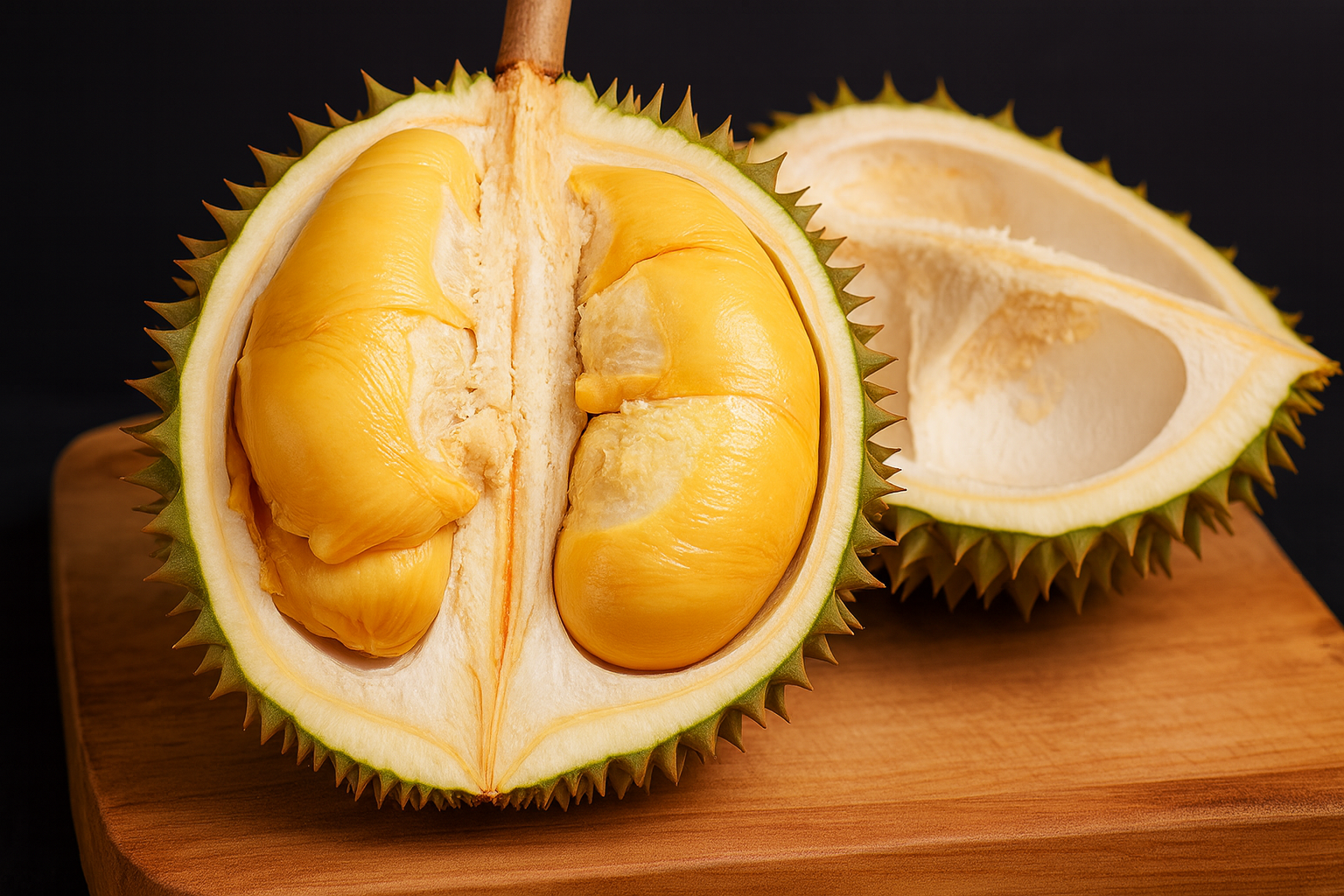
Black Thorn originates from the Kampung Lima Kongsi area (Penang, Malaysia). This variety is a hybrid between Thai durian and a local variety; the variety code D200 is currently widely used. The name “black thorn” comes from the characteristic black-tipped thorns on the fruit. In addition to the name Black Thorn, this variety is also known as Duri Hitam, Ochee, or Hei Tze. The thick skin has shallow grooves and large pyramid-shaped thorns. The bottom of the fruit often retains a dry flower stalk resembling the characteristic “black thorn.”
Morphological characteristics of Black Thorn durian
Tree and leaves
- The mature tree reaches a height of 5–6 m with a moderately wide canopy. The leaves are elongated, dark green on the upper side, and golden yellow on the underside; two different leaf forms may appear at the top of the tree. Black Thorn grows vigorously, but during the establishment phase (the first 1–3 years), the tree develops slowly and requires careful care to form a strong root system and canopy framework.
Fruit
- The fruit is round, resembling a pumpkin, with a diameter of 15–25 cm and an average weight of 1.5–3 kg. The skin is thin and gray-green; the sharp thorns with dark tips give the fruit the name “black thorn durian.” The bottom of the fruit is slightly concave in a star shape; the stem is short but sturdy, allowing the fruit to cling to the branch even when ripe. The fruit can stand upright on a flat surface.
Flesh and seeds
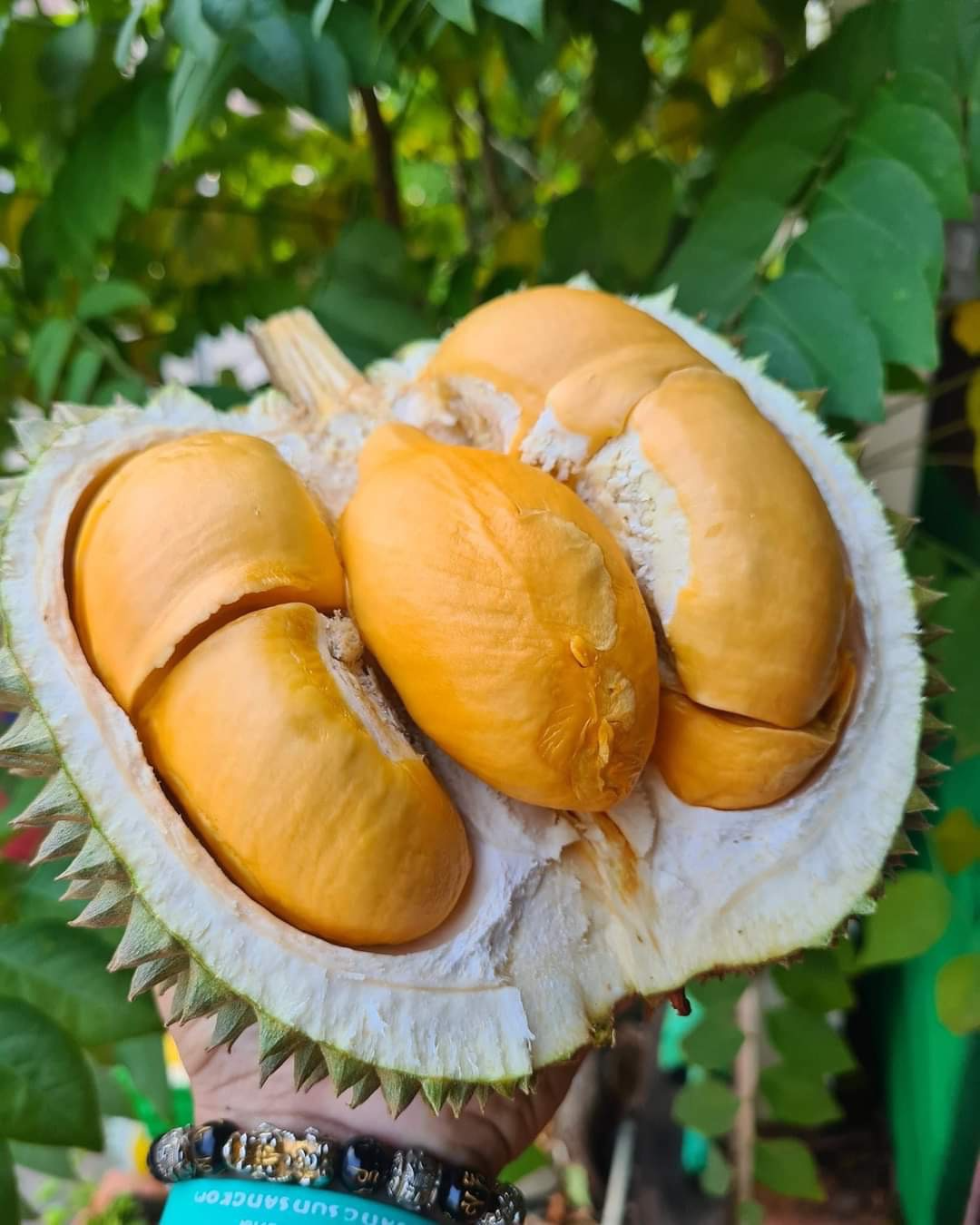
- The flesh is thick, measuring 1–1.5 cm, with a color ranging from orange-yellow to red-orange; the flesh-to-fruit weight ratio is 30–35%. The seeds have a high percentage of empty seeds (about 40%), which increases the edible portion. The flesh has a smooth texture, almost no fiber; when cutting the fruit, a light yellow core can often be seen running between the segments – a characteristic feature of Black Thorn. The flavor is sweet and creamy, with a slight bitterness at the tip of the tongue, and a lingering aftertaste of alcohol and vanilla. The Brix level (sweetness) is about 25–30 °; due to the moderate flesh ratio, it can be eaten in larger quantities without becoming overwhelming.
Cultivation conditions and growth ability
To cultivate Black Thorn durian effectively, farmers need to pay attention to the ecological requirements and growth characteristics of this variety:
- Climate: Black Thorn prefers a tropical climate with temperatures of 18–32 °C, humidity of 75–85%, and rainfall of 1,500–2,000 mm/year. In Vietnam, this variety is suitable for the southern provinces and the Central Highlands.
- Soil: The tree prefers loose, organic-rich soil with good drainage; pH 6–7. High salinity (>2 ‰) can cause yellowing leaves and gradual death, so it should not be planted in areas prone to salinity. An elevation of 300 m or more helps avoid flooding during the rainy season.
- Planting density: It is recommended to plant sparsely: 7 m × 7 m (or 8 m × 8 m) in the western region; a minimum of 8 m × 8 m, ideally 10 m × 10 m in the eastern region and Central Highlands. A wide spacing allows the trees to receive enough light and reduces pests and diseases.
- Care: Pruning for canopy formation is necessary early on because Black Thorn branches tend to grow straight; support branches when the tree bears many fruits to prevent breakage. This variety is sensitive to root disease fungi, so good drainage must be maintained, and pest control should be carried out regularly.
- Pests and diseases: According to cultivation experience in Malaysia, Black Thorn is more sensitive to pests and diseases than some other varieties. The tree is prone to root and leaf diseases under prolonged humid conditions and requires regular monitoring and control of leafhoppers and stem borers. Therefore, growers must adhere to strict pest control procedures and ensure good garden hygiene for healthy tree growth.
Overall, Black Thorn is not an “easy-going” variety, but if cultivated correctly, the tree will grow well and reward care with high-quality durian fruits.
Harvest time and yield
- Flowering and fruiting time: In Southeast Asian conditions, Black Thorn durian flowers and is harvested during the main rainy season. In Malaysia, this variety usually blooms and ripens around July – August each year. Sometimes, the tree can even produce a short off-season crop around December – January (depending on the weather conditions of each region). In Vietnam, this variety is currently being trialed sporadically, so there is no widespread seasonal data yet, but the expected harvest time is also during the rainy season (around June-August), similar to other domestic durian varieties. The time from fruit set to harvest for Black Thorn is about 110 days, slightly later than the Ri6 variety but earlier than the Monthong (Dona) variety.
- Harvesting method: Like other high-quality durian varieties, Black Thorn has the best flavor when ripe naturally on the tree and falls. Gardeners usually wait for the fruit to ripen and fall or use nets to cushion the fruit to prevent bruising. In some places, long poles are also used to gently knock ripe fruit so that the stem breaks, avoiding free-fall that could damage the flesh inside. After harvesting, it is necessary to quickly check the quality of the fruit’s skin and transport it gently because the Black Thorn skin is quite thin (only ~9-10mm), and the fruit can easily crack if subjected to strong impacts.
- Yield: The yield of Black Thorn durian is considered to be quite stable. On average, each mature tree (that has been fruiting steadily) can produce about 30 – 50 kg of fruit per year, equivalent to about 15–25 fruits (depending on the weight of each fruit). Under good care conditions, trees over 10 years old can reach or exceed this level. In the early fruiting stage, the yield is still limited: experiments show that a 3-year-old grafted tree (grafted on a 3-year-old rootstock) produces about 15 fruits in the first year, and in the second year, it produces more than 20 fruits. However, if the tree bears >35 fruits when still small, the fruits will be smaller (<1.5 kg/fruit) due to insufficient nutrition. Therefore, maintaining a moderate yield and not being “greedy for fruit” will help the tree produce larger, higher-quality fruits. Compared to Musang King, the yield of Black Thorn is comparable or slightly lower, but overall, due to the high selling price, the economic efficiency remains very attractive (detailed analysis below).
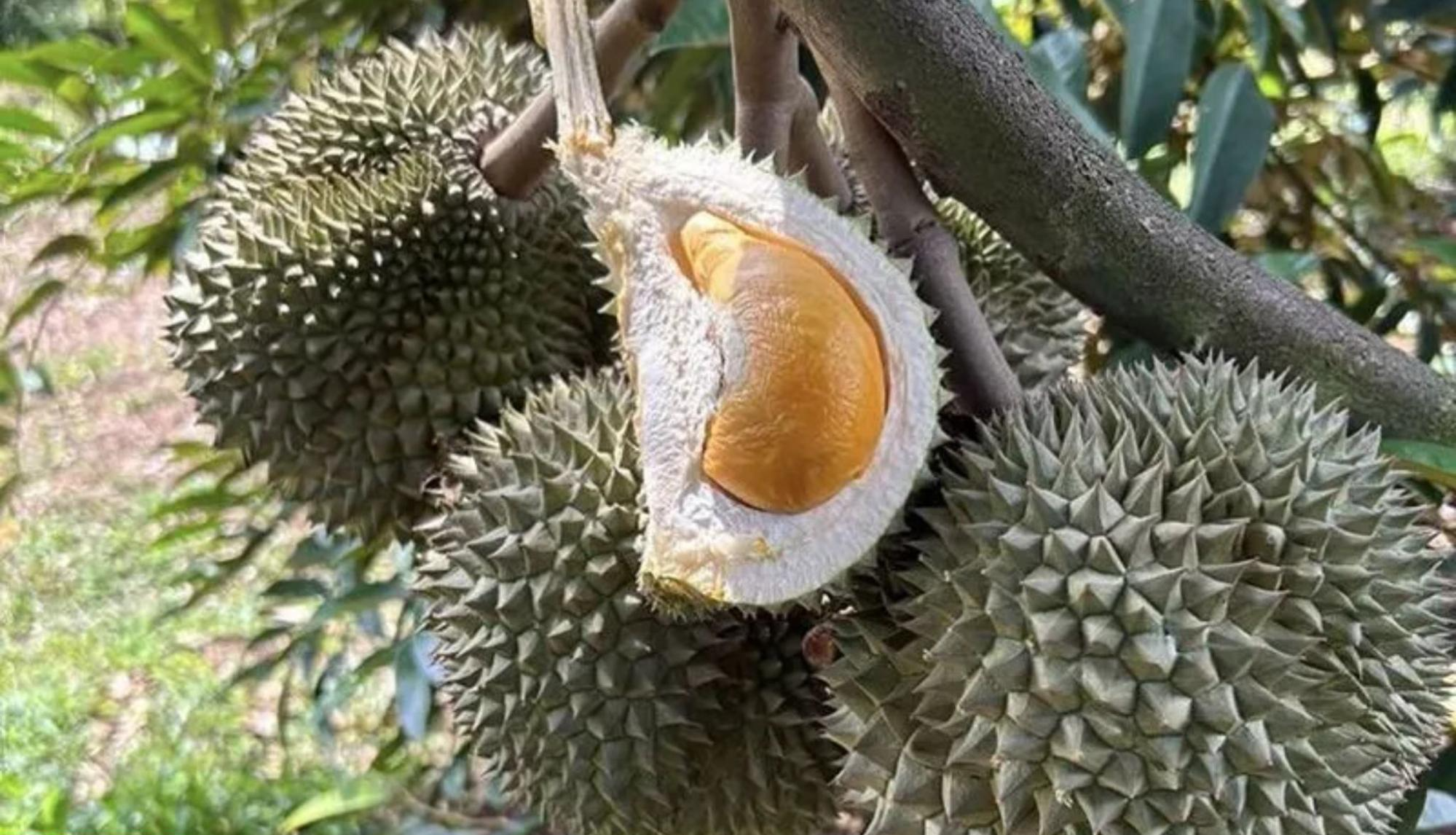
Yield stability: One advantage of Black Thorn is the good fruit set rate if adequately pollinated. The hermaphroditic flowers of this variety bloom in clusters of 2-3 flowers, with a high fruit set rate, often resulting in clusters of 2-3 fruits on a branch if not pruned. Mature trees regularly flower and fruit each year, experiencing fewer “off years” if cared for consistently and with proper irrigation management during flower bud differentiation. Of course, extreme weather fluctuations (storms, prolonged drought) can affect that year’s yield, but fundamentally, Black Thorn is not difficult to flower and bear fruit like some other finicky varieties.