


Uncategorized
What is Humic? The role and benefits of Humic substances in modern agriculture.
No humic – don’t dream of a bumper harvest! This is not just a saying, but a truth proven in modern agricultural practices. Youtube Video: “HUMIC – “Miracle drug” for soil improvement & healthy plant growth from the roots!”
What is humic substance?
Humic substance is a collection of stable organic compounds in the soil, formed from the natural decomposition of plant and animal matter over a long period. It is the main component of soil humus – the fertile layer of soil that helps plants grow well. Humic substances are divided into three main parts based on their solubility in the environment: humic acid (soluble in alkaline solution), fulvic acid (soluble in water at all pH values) and humin (insoluble in water).
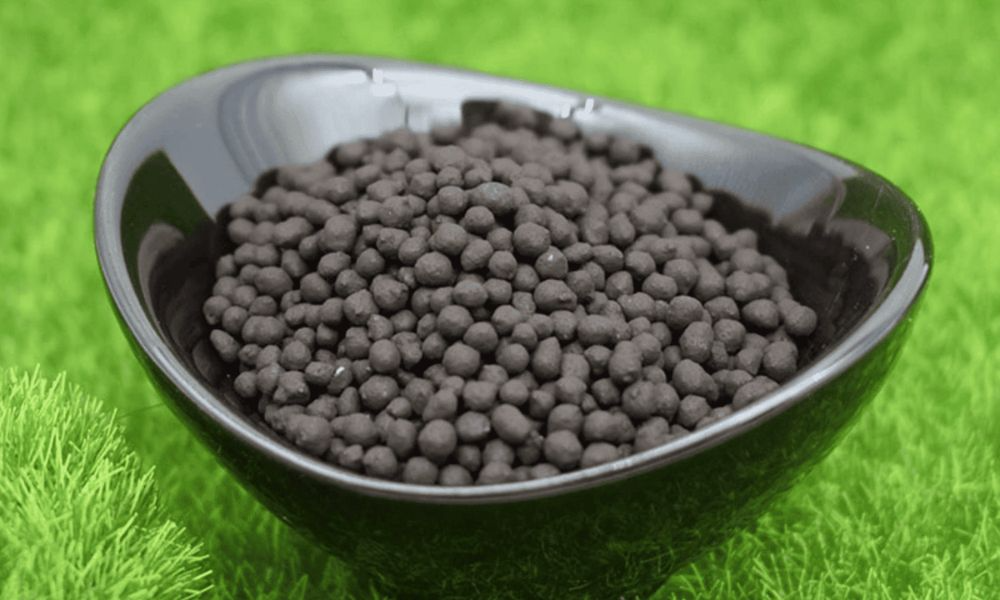
Chemically, humic substances are a complex mixture of organic polymers with aromatic ring structures, containing many functional groups such as carboxyl (-COOH) and hydroxyl (-OH) groups. These ionizable functional groups create the diverse properties of humic substances, allowing them to chelate (form coordination bonds) with metal ions and interact flexibly with other components in the soil. As a result, humic substances can retain essential nutrients in the soil and gradually provide them to plants, contributing to long-term fertility maintenance.
The role of humic substances in cultivated soil
- Improving soil structure and retaining water: Humic substances can bind small soil particles into larger aggregates, thereby increasing porosity and improving soil structure. Soils rich in humic substances become loose, aerated, and retain moisture better, allowing plant roots to penetrate deeply and absorb water easily. Consequently, the soil is less prone to erosion and reduces the occurrence of cracking during drought on the surface.
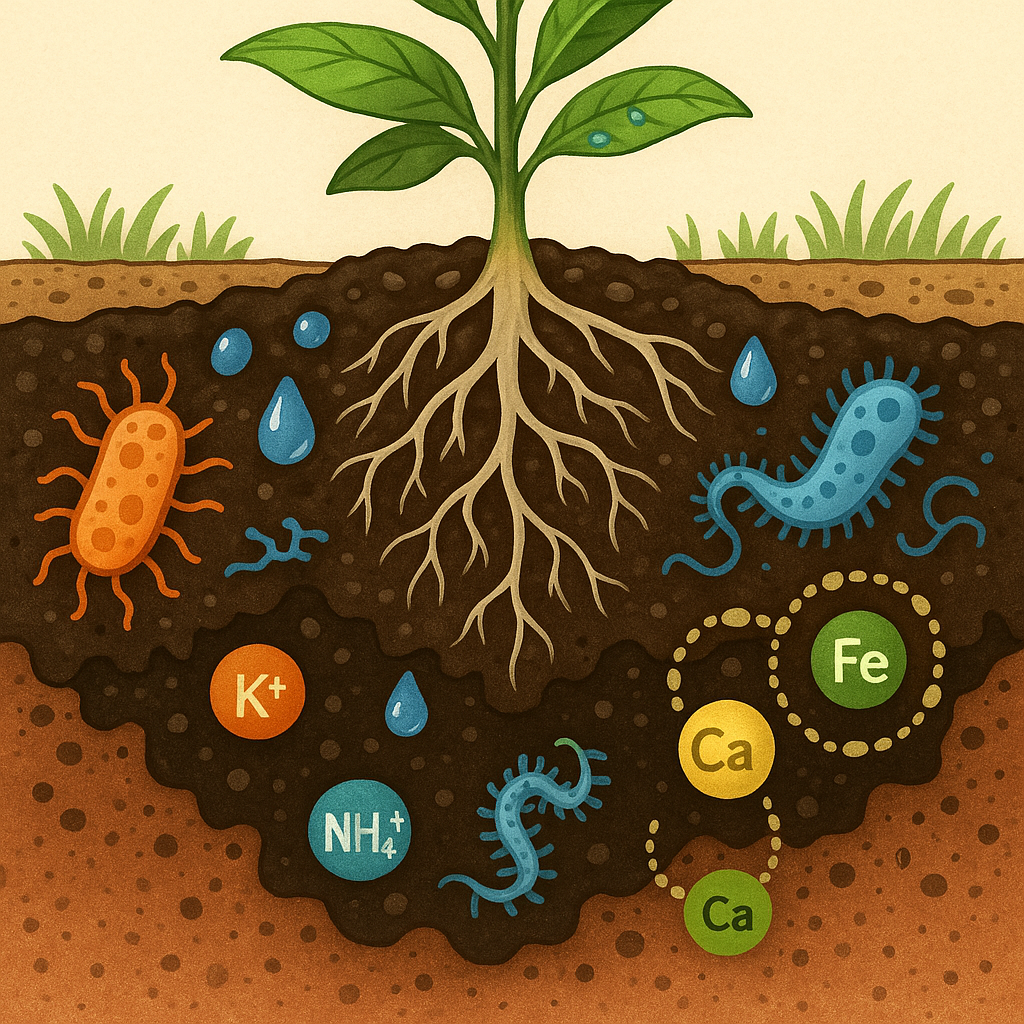
- Increasing cation exchange capacity (CEC): The ionizable functional groups (e.g., -COOH, -OH) of humic molecules create many binding sites to hold nutrient cations (such as K⁺, NH₄⁺, Ca²⁺…). By increasing CEC (Cation Exchange Capacity), humic-rich soils can accumulate and exchange more nutrients, providing stable and long-lasting nutrition for crops.
- Promoting soil microbial activity: Humic substances are a stable source of carbon and a favorable environment for beneficial soil microorganisms. The presence of humic substances stimulates soil enzymes to work more actively and promotes the proliferation of microorganisms. A healthy soil microbial community accelerates the decomposition of organic matter and releases nutrients, improving soil fertility.
- Increasing nutrient availability for plants: Humic substances can form chelate complexes with trace metal ions (such as Fe, Zn, Mn…), keeping them in a form that is easily absorbed by plants. As a result, humic substances help plant roots absorb these important trace elements more effectively while stimulating root systems to grow stronger in search of and absorbing more nutrients.
Applications of humic in agriculture
- Promoting plant growth and development: Due to its positive effects on soil and roots, humic substances stimulate plants to grow quickly and healthily. Humic promotes root system development, causing roots to penetrate deeply and spread widely, while increasing the number of root hairs. A strong root system helps plants absorb water and nutrients better, leading to faster growth and sturdy stems and branches.
- Increasing yield and quality of agricultural products: Crops supplemented with humic often yield higher and produce better quality agricultural products. This is achieved because humic helps plants maximize the absorption of essential minerals and trace elements and improves photosynthesis (due to thicker green leaves). As a result, harvested products have superior size, flavor, and nutrition, while the harvest is also more stable.
- Reducing the harmful effects of chemical fertilizers and pesticides: Humic substances in the soil can bind with nutrient ions from chemical fertilizers, minimizing fertilizer leaching. As a result, the amount of fertilizer retained in the root zone allows plants more time to absorb it, increasing fertilizer use efficiency. Additionally, humic also adsorbs and isolates some toxic chemicals from pesticides, preventing them from spreading in the soil and reducing their negative impact on crops.
- Limiting water and agricultural soil pollution: The addition of humic helps limit the leaching of nitrates and phosphates from the soil into water sources, as humic tightly holds these ions in the soil. This contributes to reducing groundwater and river pollution due to excess fertilizers. At the same time, humic also fixes heavy metals and toxins in the soil, reducing their absorption into plants or leaching into groundwater.
- Restoring degraded, depleted soils: In areas of depleted or poor sandy soils, the addition of humic substances proves very effective in improving fertility. Humic helps increase the ability to retain water and nutrients in sandy soils, improves structure, and brings beneficial microorganisms back to the soil. Over time, degraded soils will gradually restore their looseness, stabilize pH, and become rich in nutrients again.
Popular humic products today
On the market, humic is available in various product forms to suit cultivation needs:
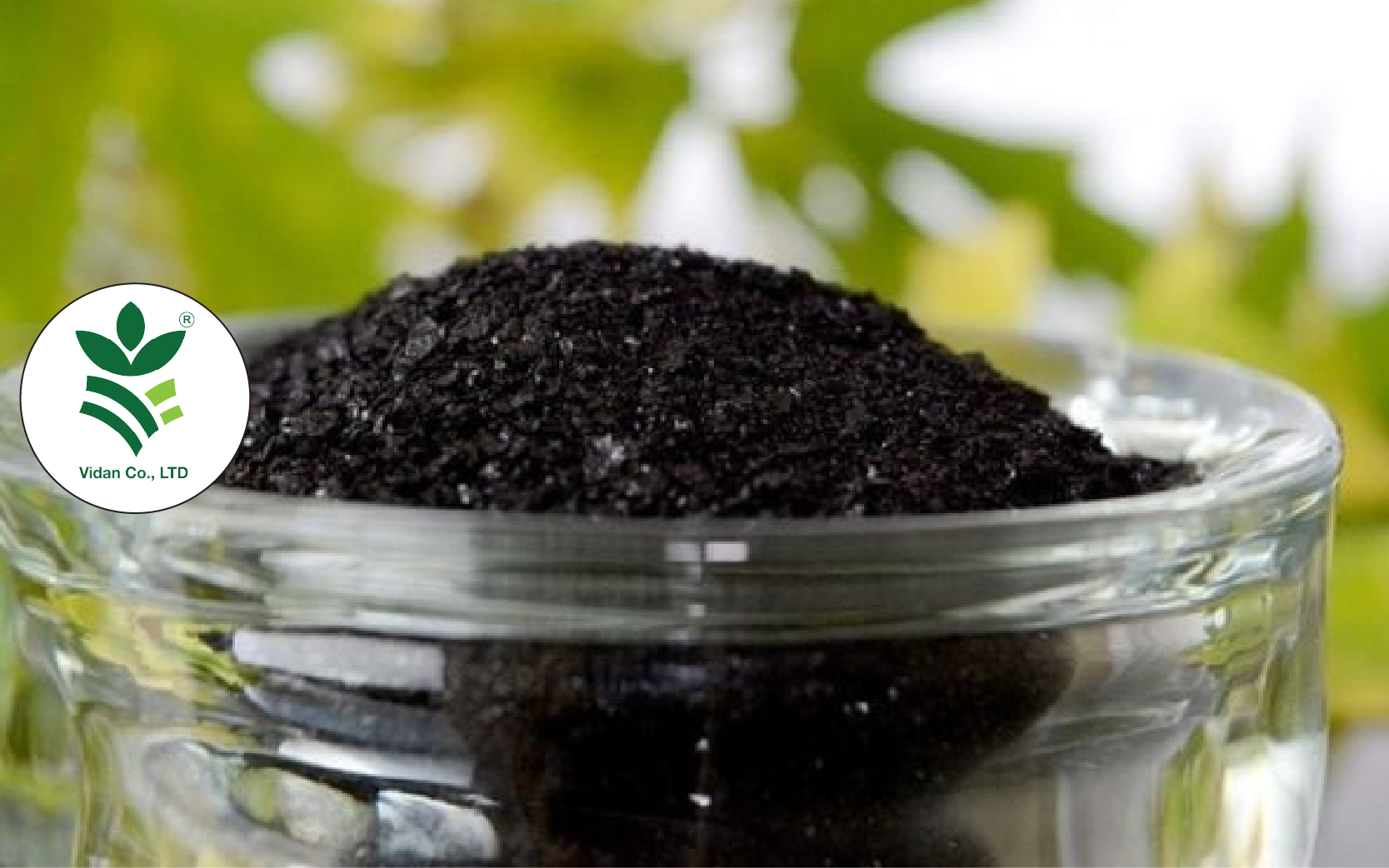
- Humic acid in powder or granular form – Extracted from natural sources such as peat, Leonardite sedimentary rock, or well-composted organic fertilizers. This product can be dissolved in water (usually requiring a slightly alkaline environment) for root watering or foliar spraying.
- Potassium humate and Sodium humate – These are potassium or sodium salts of humic acid, formulated to easily dissolve completely in water. This form of humic is convenient for mixing into fertilizers or diluting for watering, helping plants quickly absorb humic active ingredients.
- Fulvic acid – A smaller molecular form of humic, lighter in color and soluble in water at all pH levels. Fulvic acid quickly penetrates into plants, suitable for use on sensitive plants or during the seedling stage when quick nutrition is needed.
- Organic fertilizers rich in humic – Types of well-composted organic fertilizers such as earthworm castings, industrial compost, or biochar often contain high levels of natural humic. They provide humic along with many other organic nutrients, helping to improve soil and nourish plants comprehensively.
- HUMIC PROMAX (24kg) – A premium humic formulation with an advanced formula that helps improve soil looseness, stabilize pH; while stimulating plants to produce many root hairs, robust buds, and thick, lush green leaves.
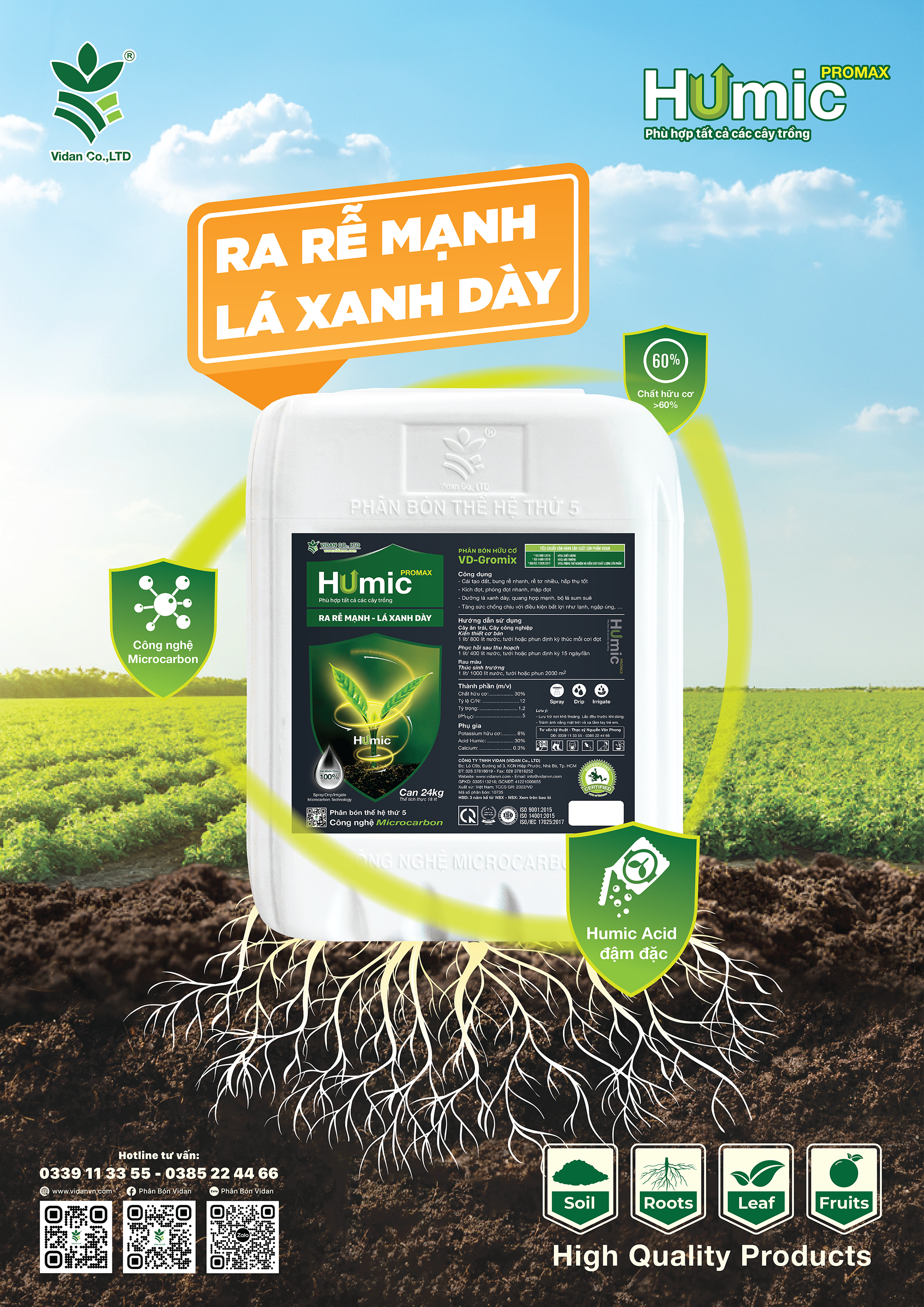
- New generation humic products like HUMIC PROMAX are proof of the outstanding effectiveness of humic in cultivation, helping farmers enhance the yield and quality of crops. HUMIC PROMAX belongs to the “5th generation fertilizer” line, designed with 3 outstanding action groups:
(1) Improves and loosens soil, helping roots to spread quickly, producing more root hairs, increasing nutrient absorption capacity;
(2) Stimulates shoots – promotes rapid shoot growth, robust shoots, limiting plant decline after harvest;
(3) Nourishes thick, green leaves, enhancing photosynthesis for strong growth and stable fruiting.
The product is recommended by the manufacturer for many high-value crops, especially durian and perennial fruit trees, helping to restore root systems, nourish canopies, fruit, and enhance resistance to adverse conditions. Therefore, HUMIC PROMAX (24kg) is a suitable choice for those who want to both improve soil and care for plants to “grow strong roots – thick green leaves” to optimize yield and farming efficiency per unit area.
Notes for effective use of humic
- Use the correct dosage and method: It is necessary to apply or spray humic according to the technical guidelines recommended for each type of crop. Applying too little will not yield significant results, while applying too much can waste resources and disrupt the balance of the soil microbial community.
- Apply humic at the appropriate stage: The best time to use humic is during the seedling stage or when the plant is in a strong growth phase. At this time, the plant roots are actively developing and can effectively absorb humic to improve growth.
- Adjust according to soil type and application method: For sandy or depleted soils, it is advisable to divide the amount of humic and apply it more frequently than for loamy or clay soils, as sandy soils retain nutrients poorly. Depending on the type of humic product, it can be applied directly to the roots or diluted for foliar spraying; follow the manufacturer’s recommendations for the best results.
- Check soil pH and product quality: It is advisable to purchase humic from reputable sources, with quality certification and clean raw materials. Additionally, regularly check the soil pH after applying humic to ensure that pH does not fluctuate too much, avoiding negative impacts on plant growth.
In summary, humic substances are indeed a powerful ally in improving soil fertility and enhancing plant health. Using humic scientifically, combined with quality products like HUMIC PROMAX, will help farmers get closer to the dream of sustainable bumper harvests.