

Uncategorized
Can rotten durian skin be eaten? Causes, signs, and advice.
Can durian with rotten skin be eaten?Sometimes growers and buyers may encounter the situation of durian with rotten skin – the surface of the skin shows mold or rot. So is rotten durian edible?
Causes of durian skin rot
There are many reasons that lead to the phenomenon of durian skin rotting or molding. Understanding the causes will help growers and sellers prevent it, while also helping buyers know why some durians have damaged skin.
- Fungi and bacteria: The most common fungus is Phytophthora palmivora which thrives in humid environments. Fungi and bacteria attack the durian skin, especially from the stem or bottom, causing the skin to rot and develop white mold.
- Humid weather: During the rainy season, when humidity is high and the garden receives little sunlight, it creates ideal conditions for mold to thrive. If the soil does not drain well, the risk of skin rot increases.
- Insects and impact: Wounds caused by pests, sucking insects, or impacts during harvesting and transportation can cause the skin to crack. Small cracks are the “gateway” for mold to enter.
- Poor storage: Storing fruits in humid, poorly ventilated places or stacking them on top of each other can damage the skin and cause mold. Washing with water and not drying the skin also increases humidity and promotes mold growth.
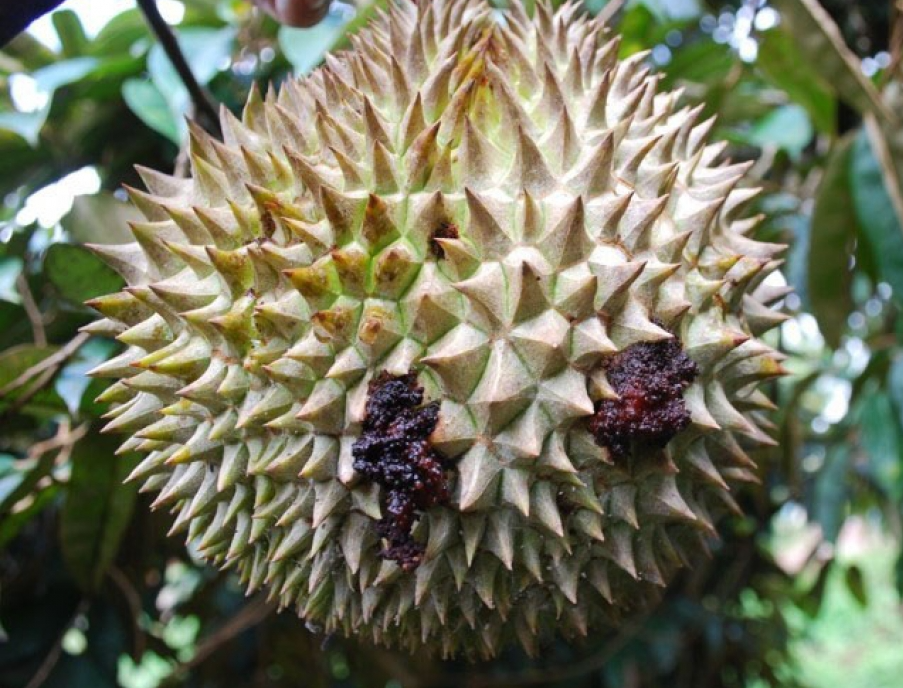
Humid weather conditions and pathogens can attack durian fruits right on the tree. In the picture, a durian on the tree is rotting at the bottom (the bottom of the fruit) due to fungus, with a brown-black rot spreading from the stem down. The fruit rot disease caused by the fungus Phytophthora usually starts from the stem or bottom of the fruit, and after a few days, blackish spots, softening skin, or white mold will appear – signaling that the rotting process has begun.
Signs of spoiled durian (rotting skin)
When the durian skin shows signs of rot or mold, how can you tell if the fruit is still edible or has spoiled? Here are some signs to identify spoiled durian that both buyers and sellers need to pay attention to:
- White, gray, or black mold spots on the skin; the initial mold area is small but spreads quickly if not treated.
- Soft, mushy skin, turning brown or black; pressing it easily sinks and may ooze liquid.
- Sour or strange smell: Naturally ripe durian has a fragrant smell; if there is a sour, alcoholic, or moldy smell, the fruit may have spoiled.
- Overripe or fermented fruit: The skin is cracked, the flesh inside is watery, and has a bitter or bland taste. The flavor often decreases significantly when mold has penetrated deeply.
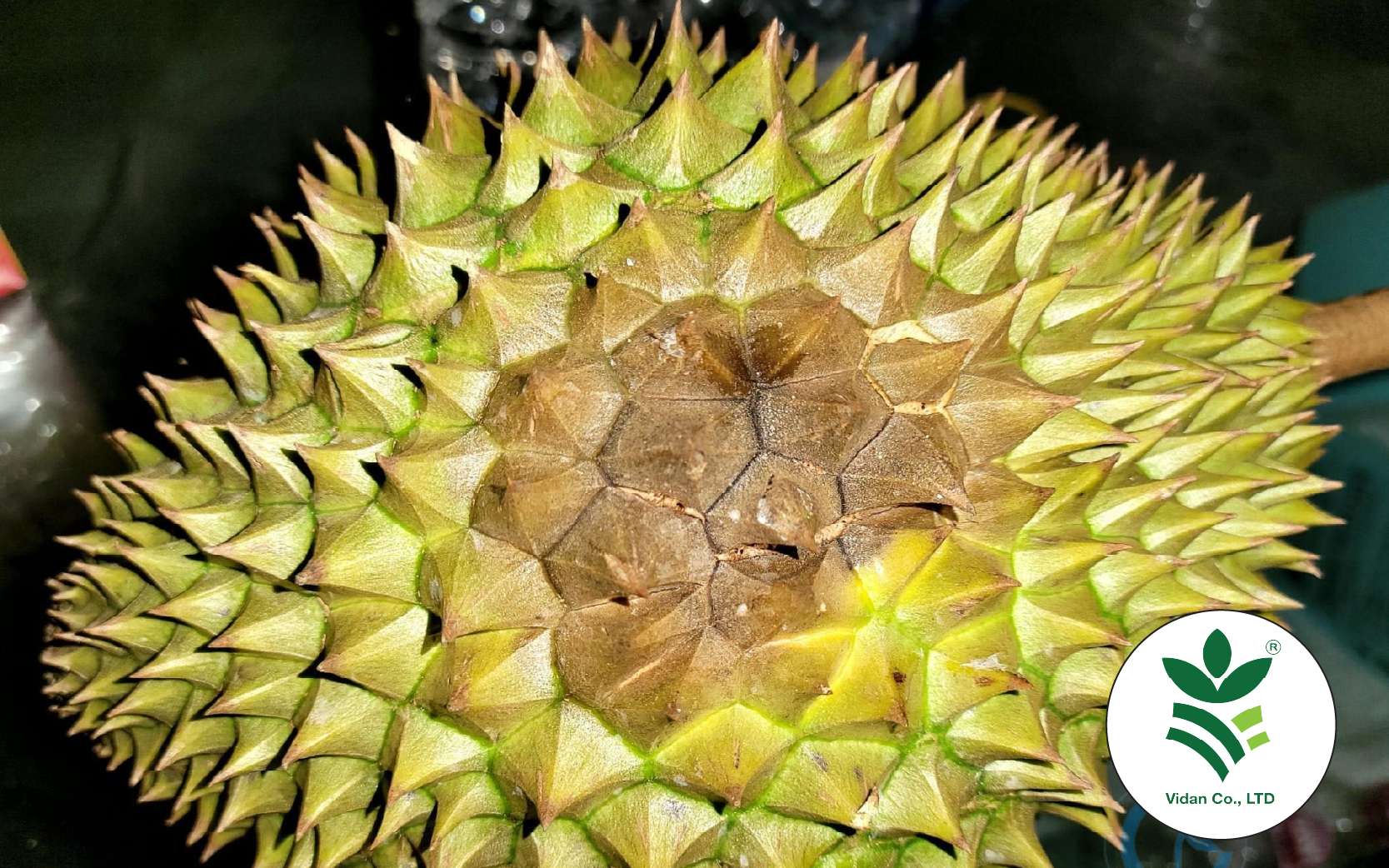
On the outside of the skin, spoiled durian will show brown-black rot patches and white mold. The image above shows a durian with part of the skin rotting: the skin area is darkened, the surface is covered with white mold, and has become soft and mushy. When encountering this phenomenon, the durian usually emits a foul smell, and it is highly likely that the flesh inside has been severely affected. Such fruits are almost certainly no longer commercially viable and are unlikely to taste good.
Can durian with rotten skin be eaten?
Experts recommend not to eat durians with moldy skin. Mold on the skin can produce toxins and spread into the flesh that are not visible to the naked eye. Eating it can cause nausea, bloating, diarrhea, especially for sensitive individuals. Moreover, the flavor is also no longer good: the flesh often loses its sweet and creamy taste, even having a sour, bitter, or alcoholic taste.
Some people choose to cut off the rotten skin if there is only a small spot and the flesh inside remains intact. However, this is not a safe solution; the best way is to discard it to protect health.
Tips for buyers
- Check the appearance: Choose fruits with hard skin, sharp spines, and bright colors (green or yellow depending on the variety). Avoid fruits with mold spots, rot, or leaking liquid. The stem should still be fresh, green, and not dry or cracked.
- Smell: Naturally ripe durian will have a light fragrance; if the stem or seam has a sour or foul smell, do not buy it.
- Storage: Keep in a dry, ventilated place. Do not wash or leave the skin damp; after cutting, wrap the remaining part tightly and put it in the refrigerator. Regularly check for early signs of mold.
Advice for sellers and growers
- Harvest and transport gently: Avoid scratching or strongly impacting the skin. Stack fruits lightly, with padding to reduce damage.
- Store in a dry, cool place: Storage areas need ventilation; do not leave fruits in damp places. Immediately remove any fruits showing signs of mold to prevent spreading to others.
- Treat newly emerging mold: If there are only small mold spots, clean them with a dry cloth or diluted saltwater, then dry in a well-ventilated area. If the rot is extensive, it should be discarded.
- Prevent diseases on the tree: Prune branches to keep the garden ventilated, spray fungicides Phytophthora at the beginning of the rainy season when necessary. Remove and dispose of diseased fruits early to prevent spreading.